
HEART catheter
Safety through direct vision: the cardiac catheter
When it comes to precise imaging of the coronary arteries, cardiac catheterization remains the undisputed gold standard. It enables PD Dr. med. Stefan Bruno, This allows us not only to visualize constrictions (stenoses) with the highest resolution, but also - if necessary - to treat them in the same session by means of stent implantation. In the hands of an experienced cardiologist, this procedure is now a safe routine procedure that saves lives and restores quality of life.
HEART catheter
Precision & intervention: 7 steps to a free vessel
A cardiac catheter is much more than just diagnostics. It is direct access to your heart to treat circulatory disorders at the root. PD Dr. med. Stefan Bruno accompanies you personally from the indication to the aftercare to ensure maximum safety and an optimal result.
- Indication: Careful preliminary examination (e.g. stress echo or MRI) to precisely assess the necessity of the procedure.
- Minimally invasive access:Gentle puncture - usually via the wrist artery (radial puncture), which significantly increases comfort after the procedure.
- Vascular representation:Insertion of a thin catheter under X-ray control and injection of contrast medium to visualize the coronary arteries.
- Pressure wire measurement (FFR): In the case of borderline constrictions, we measure the pressure directly in the vessel to decide whether a stent is really necessary.
- intervention (PTCA): Gentle widening of narrowed areas using a small balloon (angioplasty).
- Stent implantation:Insertion of state-of-the-art, drug-eluting stents (DES) to keep the vessel permanently open.
- Direct aftercare: Close monitoring after the procedure and preparation of an individual medication plan for the time afterwards.
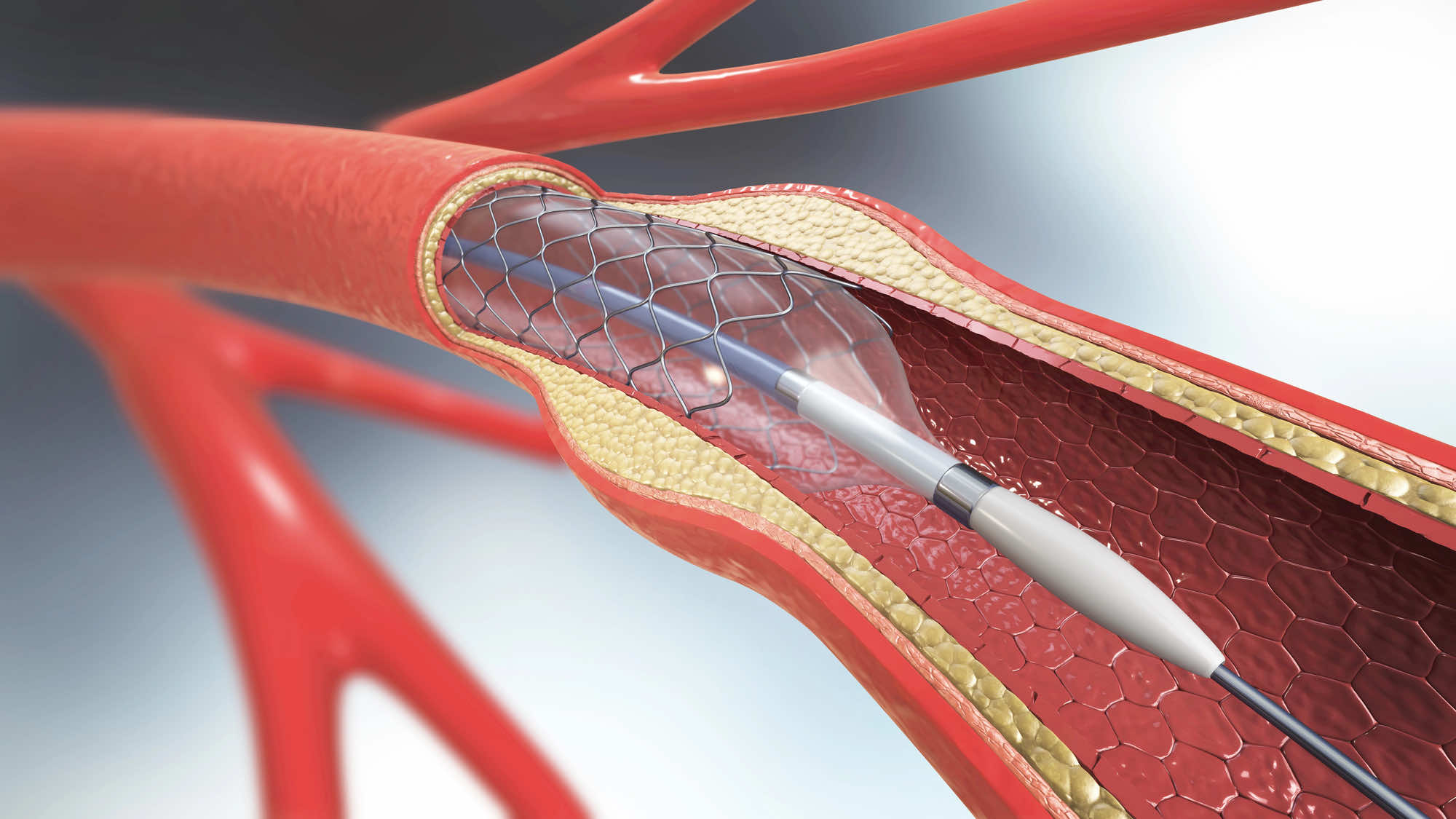
When is a catheter examination necessary?
The cardiac catheter is used if there is an urgent suspicion of a narrowing of the coronary arteries requiring treatment or if there is an acute danger.
-
For unstable angina pectorisIf chest pain occurs even with little exertion or at rest.
-
Positive stress testsIf ECG, stress echo or stress MRI have provided clear indications of a circulatory disorder.
-
After a heart attackFor immediate reopening of the occluded vessel and to save heart muscle tissue.
-
Before heart valve operationsTo ensure that the coronary arteries are healthy before surgery is performed.
The cardiac catheter - overview
In the cardiac catheterization laboratory, we obtain data that no other procedure can provide at this depth. Here we decide on the best therapy for your heart on the basis of millimeters.
| Field of investigation | Method & medical benefits |
| Coronary anatomy | AngiographyHigh-resolution X-ray imaging of the coronary arteries to localize calcium deposits and stenoses. |
| Hemodynamics | Pressure measurementDetermination of the pressure conditions in the heart chambers to assess valve defects or cardiac insufficiency. |
| Functional relevance | FFR/iFR measurementMeasurement of blood flow directly behind a stenosis in order to objectively assess the clinical significance of the stenosis. |
| Vascular endoscopy | IVUS / OCTUltrasound or light optics inside the vessel to perfectly check the condition of the vessel wall and the position of a stent. |
| Pump function | LevocardiographyContrast imaging of the left ventricle to assess global and regional mobility. |
| Oxygen saturation | OximetryMeasurement of the oxygen content in the different areas of the heart to rule out shunts (holes in the cardiac septum). |
HEART catheter
Frequently asked questions about the catheter examination
Early clarification of symptoms or risk factors is the key to long-term heart health. Our cardiology practice in Düsseldorf offers you the right specialized care for every need.
No. The insertion site is locally anesthetized. As the vessels inside have no pain receptors, you will not feel the catheter being inserted. Only a feeling of warmth is normal when the contrast medium is administered.
Purely diagnostic examinations can often be carried out on an outpatient basis or with an overnight stay. After a stent implantation, patients usually stay overnight for observation as a precaution.
Access via the radial artery (wrist) is much more comfortable. You do not have to lie flat for hours afterwards and the risk of post-operative bleeding is considerably lower compared to the groin.
Like any procedure, cardiac catheterization also has risks (e.g. bruising, intolerance to contrast media). However, with an experienced team and modern technology, the rates of serious complications are in the very low per mille range.
After an outpatient examination, you should not drive for at least 24 hours. We recommend that you are picked up by a relative or take a cab.
You must take a "blood thinner" (usually ASA) permanently. A second active substance to inhibit the blood platelets is added after a stent for a limited period of time (usually 6 to 12 months).
HEART catheter
Personal support for invasive procedures
A cardiac catheterization is an important step for every patient. That is why PD Dr. med. Raphael Bruno We attach great importance to seamless care. From the detailed clarification in the quiet ambience of the New steel yard from the procedure in specialized partner clinics to personal aftercare, you will always remain in the same trustworthy hands. We coordinate everything for you so that you can concentrate fully on your recovery.
 German
  English
  Arabic
  Japanese
  Chinese
  Russian