

A cardiac evaluation is a multi-step, systematic process in which your heart specialist combines various diagnostic procedures to get a complete picture of your cardiovascular system. It is far more than just performing individual tests; it is an overall medical assessment tailored to your individual symptoms and risk factors. At Dr. Raphael Bruno's practice, every Cardiologic examination is designed to give you maximum clarity and certainty through sound and comprehensible diagnostics.
Aims of a cardiology examination: What do we want to find out?
Each Cardiologic examination pursues clear goals that are based on your personal situation. Whether it is to clarify complaints or purely as a preventive measure - important questions should be answered at the end of the examination.
The main objectives of a cardiologic examination are
Based on these goals, the exact scope of your Cardiologic examination determined individually.
The pillars of the cardiology examination: structure, electricity and function
In order to obtain a complete picture of the heart, a comprehensive Cardiologic examination on the analysis of three main pillars. Each pillar is examined using specific diagnostic procedures.
Pillar 1: Assessment of the structure (anatomy & mechanics)
This involves the structure and mechanical function of the heart. Is the heart muscle of normal thickness? Are the heart cavities of normal size? Are the heart valves functioning properly? The central tool for this is the Echocardiography (heart ultrasound), which provides us with detailed, moving images of the heart structure.
Pillar 2: Analysis of „electricity“ (rhythm & excitation)
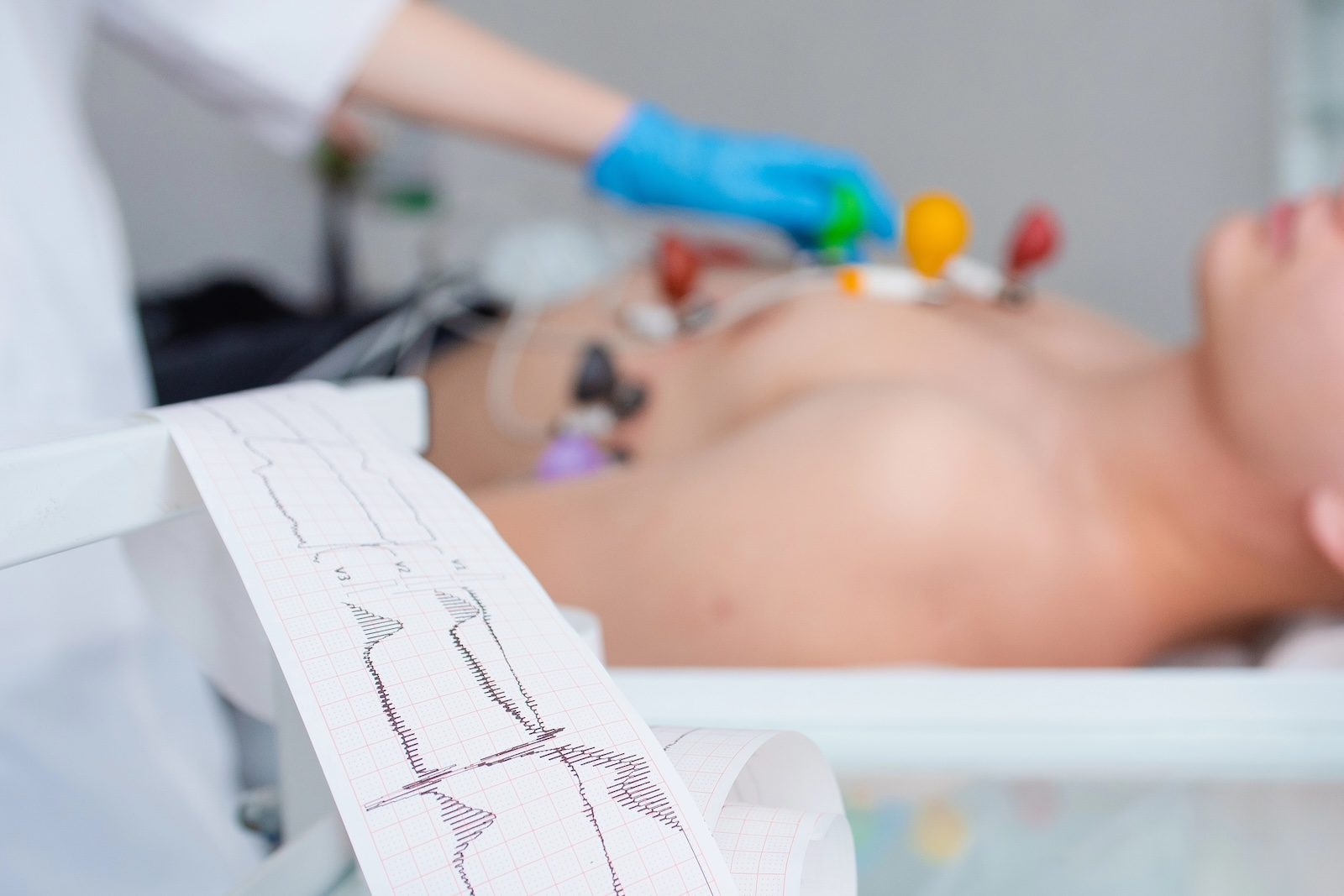
The heart is controlled by its own electrical system. Disturbances in this system lead to cardiac arrhythmia. To analyze this electrical activity, we use the Electrocardiogram (ECG) in its various forms: as a resting ECG, as a long-term ECG over 24 hours and as an exercise ECG.
Pillar 3: Measurement of function under load (performance)
Many heart diseases only become apparent when the heart is challenged. This is why the assessment of cardiovascular function during exercise is a crucial component. The Exercise ECG (ergometry), which shows us how heart rate, blood pressure and electrical activity react to stress.
Cardiological examination for specific symptoms: our procedure
Depending on the main symptom, the diagnostic components are combined in a targeted manner in order to find the most likely cause quickly and efficiently. The following table shows our typical procedure for common symptoms.
Leading symptom | Primary diagnostic question(s) | Typical examination combination |
Palpitations / heart stumbling | Is there a relevant cardiac arrhythmia? Is the heart structurally healthy? | Medical history, resting ECG, long-term ECG, echocardiography, laboratory (thyroid) if necessary |
Chest pain on exertion | Is there a suspected circulatory disorder (CHD)? | Medical history, resting ECG, exercise ECG, echocardiography |
Shortness of breath on exertion | Do you have heart failure or a heart valve defect? | Medical history, echocardiography, resting ECG, stress ECG if necessary |
Dizziness / fainting | Is the cause a rhythm disturbance (too slow/fast) or a structural problem? | Medical history, long-term ECG, long-term blood pressure, echocardiography |
This systematic approach ensures that your Cardiologic examination is targeted and without unnecessary tests.
The extended cardiology examination: sports and preventive medicine
In addition to the clarification of complaints, we also offer extended examination programs for special target groups at our practice in Düsseldorf.
What characterizes a comprehensive cardiological examination
The quality of a Cardiologic examination is not only measured by the technology used, but also by several factors to which we attach particular importance:
Frequently asked questions about the cardiological examination
Here we answer some of the most frequently asked questions about cardiac examinations.
Why are so many different tests carried out?
Each examination provides a different, unique piece of the overall puzzle. The ECG shows the „electrics“, the ultrasound the „mechanics“ and the exercise ECG the behavior under „load“. Only by combining this information can your cardiologist draw a complete and reliable picture of your heart and make a reliable diagnosis.
Can a cardiological examination also detect psychological causes?
One Cardiologic examination can reliably rule out organic, i.e. physical, causes for heart complaints. Palpitations or chest pain can also be triggered by stress or anxiety (psychosomatic complaints). If the comprehensive examination does not reveal any pathological findings in the heart, this is enormously important and reassuring information that paves the way for targeted treatment of the actual cause.
What does „non-invasive“ examination mean?
„Non-invasive“ means that no intervention in the body (such as an incision or the insertion of a catheter) is necessary for the examination. All standard procedures carried out in our practice, such as ECG, ultrasound or stress tests, are non-invasive. They are painless and without the risks of surgery.
My family doctor has already done an ECG. Why is it being repeated by the cardiologist?
The ECG is a snapshot. An ECG written by your family doctor is important initial information. In the specialist Cardiologic examination it is repeated to document the current status and compare it directly with the other findings (e.g. the cardiac ultrasound). In addition, the cardiologist often has higher-quality equipment with more leads and greater expertise in interpreting subtle changes.
How safe is a stress test?
An exercise ECG is always performed under continuous medical monitoring of the ECG, blood pressure and your personal condition. There are clear criteria, and the test is stopped immediately if they are met. The test is therefore very safe. In addition, it is checked in advance whether there are any medical reasons against a stress test.
What is the difference between an examination in the practice and in hospital?
The Cardiologic examination in a specialist practice focuses on planned, outpatient clarification and long-term care. The hospital primarily treats emergencies, unstable patients and invasive examinations (e.g. cardiac catheterization, cardiac MRI) that require inpatient monitoring.
How reliable are the results of a cardiology examination?
Modern non-invasive procedures are very reliable and have a high diagnostic value. An inconspicuous finding in a comprehensive basic cardiological examination can rule out a relevant heart disease with a very high probability and therefore gives you a high degree of certainty.
My pulse is often very high, but everything is always normal at the doctor's. What now?
This phenomenon is very common. Rhythm disturbances often occur only sporadically. It is precisely for these cases that the long-term ECG over 24 hours is the method of choice. It records your heart rhythm in normal everyday life and can therefore also „catch“ disturbances that do not occur in the short time in the practice.
Do I have to change my lifestyle after the examination?
That depends entirely on the results. Often a Cardiologic examination the impetus for positive changes. If risk factors such as high blood pressure or poor blood lipid levels are identified, lifestyle changes (diet, exercise) are a central and very effective part of the treatment. We will advise you on this in detail.
Is a cardiological examination also useful if I feel healthy?
Yes, very much so. Many serious cardiovascular diseases, above all arteriosclerosis and high blood pressure, develop completely unnoticed over years and decades. A preventive Cardiologic examination can uncover these „silent“ processes at an early stage and gives you the chance to take countermeasures in good time.
Sound diagnostics as the basis for your health
A carefully executed and expertly interpreted Cardiologic examination is the cornerstone for protecting and maintaining your heart health. At Dr. Raphael Bruno's practice, we ensure that you receive diagnostics that are based on the latest scientific findings and focus on your personal situation. Make an appointment for your comprehensive examination.



 German German
  English
 Arabic
 Japanese
 Chinese
 Russian