
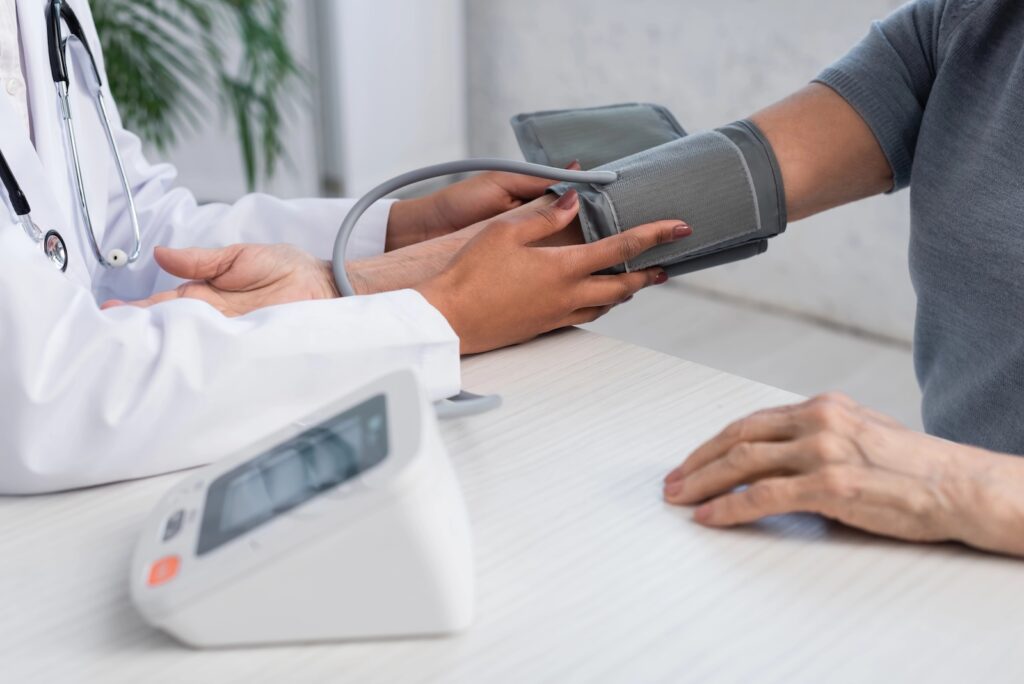
A high blood pressure specialist, also known as a hypertensiologist, is your competent point of contact when the diagnosis and treatment of high blood pressure goes beyond routine GP care. The expertise of such an expert is crucial, particularly in cases of difficult-to-adjust values, suspected rare causes or secondary diseases that have already occurred. As a certified High blood pressure specialist (Hypertensiologist DHL®) and experienced cardiologist, PD Dr. Raphael Bruno offers you in-depth diagnostics and individualized therapy in his practice in Düsseldorf to bring your blood pressure safely and effectively into the target range.
When should you see a high blood pressure specialist?
GP care is the basis of high blood pressure treatment. In certain situations, however, it is advisable or even essential to consult a High blood pressure specialist to ensure optimal and safe therapy.
A visit to a specialist is particularly advisable in the following cases:
- Difficult to adjust (therapy-resistant) hypertension: If your blood pressure is not within the target range despite taking three or more different medications.
- High blood pressure at a young age: In patients under 40 years of age, a specific, treatable cause must always be sought.
- Suspicion of secondary hypertension: If there are signs that the high blood pressure could be the result of another illness (e.g. kidney or hormone disorders).
- High blood pressure with organ damage: If secondary diseases of the heart (e.g. thickening of the heart muscle), the kidneys or the brain have already been detected.
- Severe fluctuations in blood pressure: For pronounced and symptomatic fluctuations that are difficult to manage.
- Intolerance to standard medication: If you suffer from severe side effects and an alternative therapy strategy is required.
What does a high blood pressure specialist do differently? The diagnostic depth
Diagnostics for a High blood pressure specialist goes far beyond repeated measurements in practice. The aim is to obtain a complete and realistic picture of your blood pressure behavior and to record the effects on your body.
The gold standard is the 24-hour long-term blood pressure measurement (ABDM). Only with this method can we assess the behavior of your blood pressure in normal everyday life, at work, at rest and especially during sleep. A lack of nocturnal drop in blood pressure („non-dipper profile“), for example, is an important risk factor that remains undetected in individual measurements.
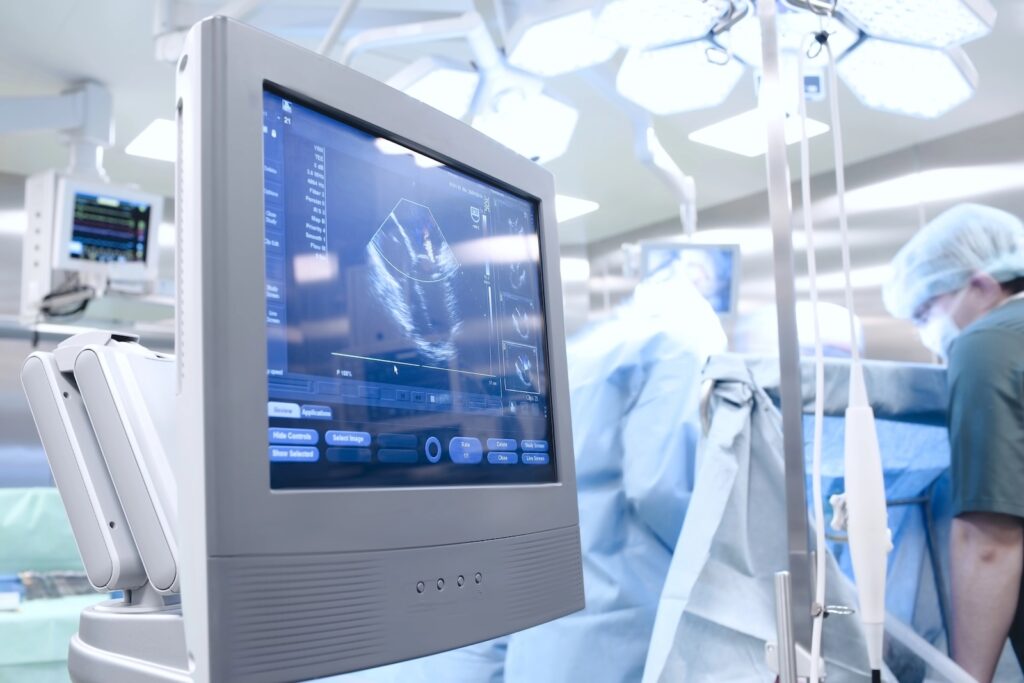
Specialized diagnostics also include a targeted search for organ damage that has already occurred but is often not yet noticeable. This includes an echocardiography to assess the heart, an ultrasound examination of the carotid arteries and kidneys as well as a detailed analysis of blood and urine values.
The high blood pressure specialist for treatment resistance: when the tablets don't work
It is a frustrating situation: you take several medications every day and yet your blood pressure remains too high. In this case, we speak of therapy-resistant hypertension. As High blood pressure specialist we pursue a systematic approach to find the causes and optimize the therapy.
Typical criteria for treatment resistance:
- The blood pressure is still above the target value (e.g. > 140/90 mmHg) despite taking 3 different antihypertensive medications (one of which is a diuretic) at the optimum dose.
- Although the blood pressure is in the target range, 4 or more medications are required.
Our approach:
We check the correct intake of medication, search for substances that increase blood pressure (e.g. certain painkillers), optimize the combination of drug classes according to a scientific step-by-step scheme and initiate an intensive search for secondary causes.
The search for the cause: secondary hypertension as a case for the specialist
While most people have „essential hypertension“ with no clear single cause, in around one in ten patients, high blood pressure is the result of another, often curable disease. The search for these causes is one of the core tasks of the High blood pressure specialist.
Common causes of secondary hypertension
Possible cause (examples) | What is being examined? | Therapeutic approach |
Kidney diseases | Ultrasound of the kidneys, detailed blood and urine tests for protein and kidney function. | Treatment of the underlying kidney disease, special selection of medication. |
Renal artery stenosis | Ultrasound Doppler of the renal arteries. | If necessary, widening of the constriction using a catheter procedure (balloon dilatation/stenting). |
Sleep apnea syndrome | Outpatient screening for nocturnal breathing stops. | Weight reduction, nocturnal positive pressure ventilation (CPAP therapy). |
Hormonal disorders (e.g. Conn's syndrome, pheochromocytoma) | Specialized blood and urine tests for hormones (e.g. aldosterone, renin). | Drug blockade or surgical removal of the hormone-producing tumor. |
Thyroid diseases | Determination of thyroid hormones in the blood (TSH, fT3, fT4). | Medication to adjust thyroid function. |
Your high blood pressure specialist in Düsseldorf: The expertise of Dr. Raphael Bruno
As a specialist in cardiology and certified hypertensiologist DHL®, PD Dr. Raphael Bruno offers you the ideal dual expertise for the treatment of high blood pressure. He not only understands the mechanisms of blood pressure regulation, but also the direct effects on the most important target organ: the heart. This combination enables a holistic risk assessment and treatment planning that takes all aspects of your cardiovascular health into account. Certification by the German Hypertension League (DHL®) guarantees you state-of-the-art treatment.
Frequently asked questions for your hypertension specialist
Here we answer questions that we are asked in particular by patients with difficult-to-control or long-standing high blood pressure.
My blood pressure is high despite medication. What else can I do?
This is the classic situation for a High blood pressure specialist. First, we analyze whether the current combination of medication is optimal and whether all doses have been exhausted. Often, considerable success can be achieved by changing or supplementing the drug classes. At the same time, an intensive search for a secondary cause is essential.
How many medications to lower blood pressure are „too many“?
There is no fixed upper limit. The aim is to lower blood pressure to the target range with as few medications as possible, but as many as necessary. A modern and guideline-based therapy with a combination of three or four different low-dose medications is often standard today and better than a single medication at maximum dose.
Can the cause of high blood pressure always be found?
In the case of common essential hypertension, there is a complex interplay of genetics and lifestyle factors; there is no single cause. In the case of secondary hypertension, a High blood pressure specialist However, in many cases the cause can be uncovered. If this is successful, high blood pressure can sometimes even be cured.
What does my weight really have to do with my blood pressure?
The connection is very close. Every kilogram of excess weight, especially abdominal fat, increases blood pressure. Conversely, losing weight is one of the most effective non-drug measures for lowering blood pressure. For every kilogram of weight lost, systolic blood pressure can fall by around 1 mmHg.
Why do I need a cardiac ultrasound as a high blood pressure patient?
Cardiac ultrasound (echocardiography) is crucial to see whether the long-term high blood pressure has already left its mark on the heart. A typical finding is a thickening of the heart muscle (left ventricular hypertrophy). The detection of such a change increases the individual risk and underlines the need for consistent blood pressure reduction.
Why do I need a vascular ultrasound as a high blood pressure patient?
High blood pressure can gradually damage the blood vessels and increase the risk of heart attack, stroke and dementia. A vascular ultrasound shows at an early stage whether vascular changes or deposits already exist. This allows the individual risk to be better assessed and treatment to be adapted accordingly. The examination is painless, safe and provides meaningful results immediately. Regular vascular diagnostics are an important part of preventive care for high blood pressure.
Can my blood pressure be lowered too much?
Yes, care must be taken not to lower blood pressure too quickly or too much, especially in older patients or those with vasoconstriction, as this can lead to dizziness or reduced blood flow to organs. An experienced High blood pressure specialist will therefore always adjust the therapy gradually and set individual target values.
What role does salt play in high blood pressure?
A high salt intake leads to an increase in blood pressure in many people („salt-sensitive hypertensives“), as salt binds water in the body. Reducing salt intake to less than 5-6 grams per day is a very effective dietary measure. Beware of hidden salt in ready-made products, sausage and bread!
I have heard that there are new procedures such as renal denervation. Is that something for me?
Renal denervation is a catheter procedure in which nerve fibers in the renal vessel are sclerosed. It is a treatment option for selected patients with severe, therapy-resistant hypertension, which is carried out in specialized centers. As your High blood pressure specialist we can check whether you are a candidate for such a procedure and initiate the necessary steps with our certified cooperation center at Düsseldorf University Hospital.
Does blood pressure change during the menopause?
Yes, many women notice a significant increase in their blood pressure during and after the menopause. This is due to hormonal changes and the loss of the vasoprotective effect of oestrogen. Close monitoring during this phase of life is therefore particularly important.
My partner snores heavily. Can this affect his blood pressure?
Yes, loud, irregular snoring with breathing interruptions is a main symptom of sleep apnoea syndrome. These nocturnal breathing interruptions lead to massive stress in the body and are one of the most common causes of secondary hypertension, which is difficult to control. We would be happy to carry out a screening for you, which you can do in the comfort of your own home.
Your path to optimally controlled blood pressure
Treating high blood pressure is a long-term task that often requires patience, but above all expertise. As your High blood pressure specialist in Düsseldorf, PD Dr. Raphael Bruno is your partner in getting even complex and difficult-to-treat cases under control. Don't settle for values that are too high. Make an appointment for a specialized clarification.



 German
  English
  Arabic
  Japanese
  Chinese
  Russian