
Lactate performance test
Lactate performance test: training with a system
Stop guessing - start measuring. The lactate performance test is the proven tool for objectively determining your current fitness level. By analyzing the concentration of lactic acid (lactate) in your blood, you can determine PD Dr. med. Raphael Bruno Your individual metabolic zones. Regardless of whether you are training for your first marathon or want to get back on track safely after cardiac treatment: We provide you with the exact data for effective and healthy training.
Lactate performance test
Precise control: 7 steps to your training plan
A lactate test with PD Dr. med. Raphael Bruno combines sports science analysis with cardiological safety. We not only determine your endurance, but also monitor your heart function at the same time. In this way, we ensure that your increase in performance is based on a healthy foundation and that you achieve your goals without overloading yourself.
- Rest value determination: Measurement of the baseline lactate value and the resting heart rate before exercise.
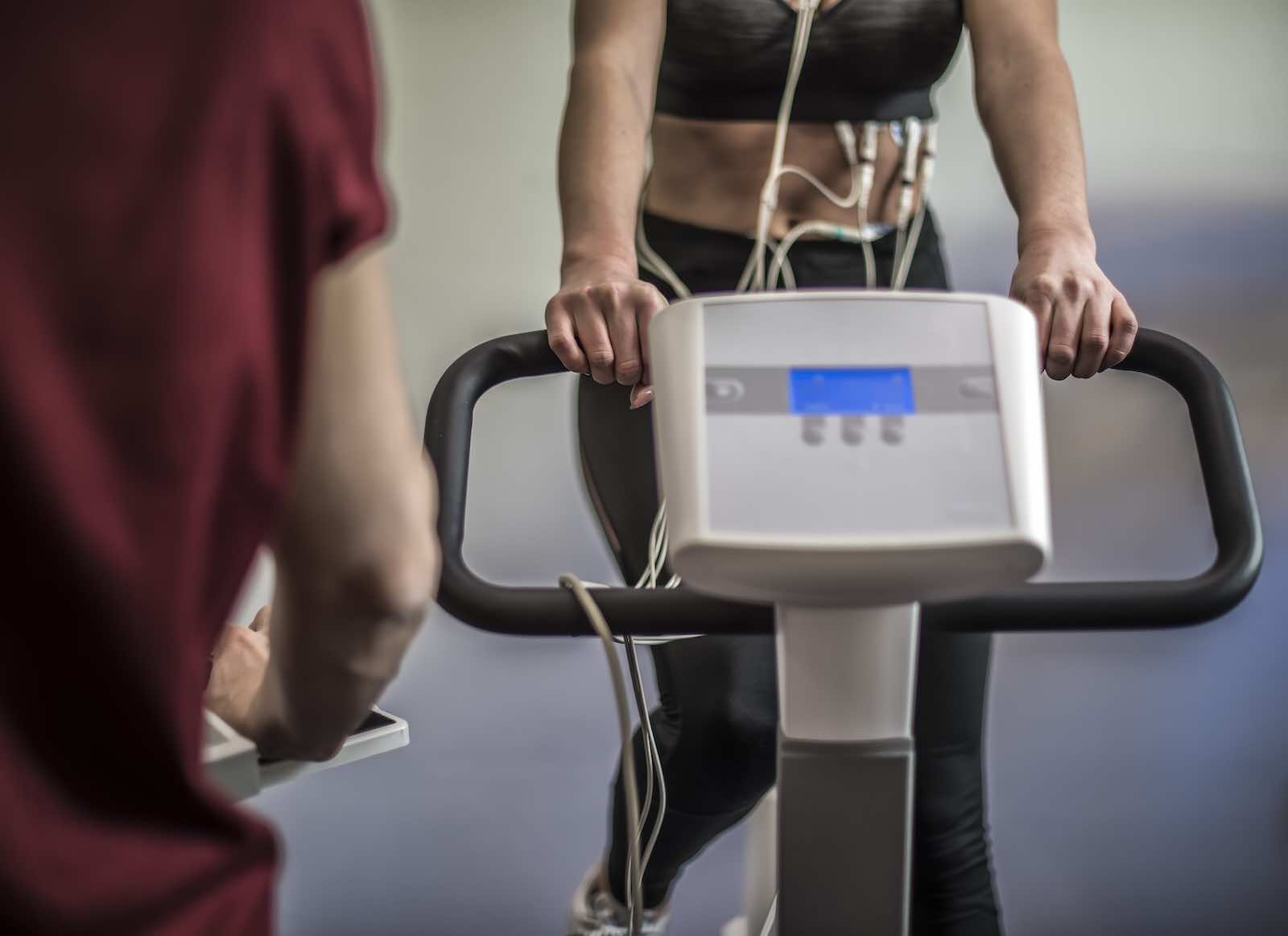
- Step test protocol: Gradual increase in exercise on the ergometer (treadmill or bicycle) under cardiological supervision.
- Capillary blood sampling:Minimal collection of a drop of blood from the earlobe at the end of each exercise stage.
- Heart rate coupling: Simultaneous documentation of your pulse for exact assignment of the lactate curve.
- Threshold analysis: Mathematical determination of the aerobic and anaerobic threshold (lactate steady state).
- Individual zone calculation: Determination of your personal training zones (regeneration, fat metabolism, GA1, GA2).
- Sports medicine coaching: Detailed discussion of the results and specific training recommendations by PD Dr. Bruno.
For whom is lactate measurement useful?
Determining lactate thresholds is the key for anyone who wants to use their time efficiently and strengthen their cardiovascular system in a targeted manner.
Ambitious amateur athletesTo avoid overtraining and for precise preparation for competitions.
Losing weightIdentification of the optimum heart rate range for maximum fat burning (lipid metabolism training).
Heart patients & rehabDetermining a safe stress corridor for returning to work after illness.
Managers & busy peopleOptimization of limited training time through highly efficient, data-based units.
What we measure - your metabolic parameters
Lactate is an intermediate metabolic product that shows us how your muscles generate energy. In combination with cardiological measurements, this provides a complete picture of your performance.
| Parameter & measured value | Sports medicine significance |
| Lactate concentration | Metabolic indicatorIndicates when your muscles enter the acidic range (anaerobic) and fatigue sets in. |
| Aerobic threshold | Basic enduranceThe area in which you can exercise for a very long time (fat metabolism training). |
| Anaerobic threshold | Power limitThe point at which lactate formation and breakdown are just in balance (maximum stamina). |
| Heart rate zones | Pulse controlTranslation of the lactate values into specific heart rates for your sports watch. |
| Recoverability | Lactate reductionMeasurement of how quickly your body breaks down lactate again after exercise (marker for fitness level). |
| Maximum power | Pmax / WattDetermination of the maximum force development at the point of total load. |
Lactate performance test
Frequently asked questions about the lactate performance test
Early clarification of symptoms or risk factors is the key to long-term heart health. Our cardiology practice in Düsseldorf offers you the right specialized care for every need.
Yes, you should have had an infection at least 2 weeks ago. As we push you to the limit, PD Dr. Bruno always carries out a short cardiological check beforehand.
Bring sportswear, sturdy sneakers and a towel. As we take blood from the earlobe, you should not wear large earrings.
The lactate test measures the metabolic products in the blood, while spiroergometry measures the respiratory gases. Both methods complement each other perfectly - at KardioPro we decide individually which method is better suited to your goal.
To document progress and adjust the training areas, it is advisable to repeat the training every 6 to 12 months.
We recommend avoiding caffeine 3-4 hours before the test, as this can affect the heart rate and lactate formation.
No. It is a tiny prick on the earlobe, similar to a blood glucose test. Most patients hardly feel it.
Lactate performance test
Performance diagnostics at professional level
Performance diagnostics in the New Stahlhof means: train like the pros under medical supervision. After the test, you can use our high-quality shower facilities and freshen up. PD Dr. med. Raphael Bruno will then take the time to analyze your curves together with you. You leave the practice not just with data, but with a clear understanding of your body and a motivating plan for your future.


 German
  English
  Arabic
  Japanese
  Chinese
  Russian