
Lipidology is the specialized field of internal medicine and cardiology that deals with the diagnosis, treatment and prevention of lipid metabolism disorders. Elevated blood lipid levels, especially high cholesterol, are among the greatest risk factors for heart attacks and strokes. As a certified lipidologist (DGFF®), Dr. Raphael Bruno offers you highly qualified care in this important field of preventive medicine in his practice. We translate complex laboratory values into a diagnosis that you can understand and develop a customized strategy to optimally adjust your blood lipids and protect your blood vessels.
Why lipidology? The „silent“ dangers of high blood lipid levels
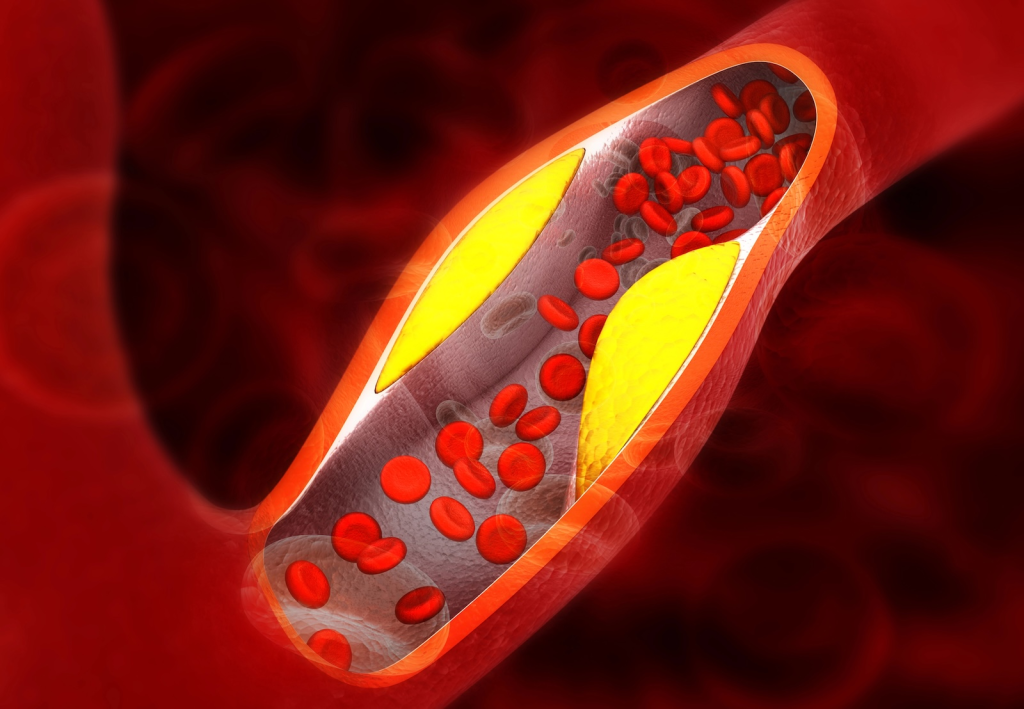
Metabolic disorders do not cause any noticeable symptoms for a long time. You don't feel ill, but a gradual and dangerous process can take place inside the blood vessels: arteriosclerosis, also known colloquially as „vascular calcification“.
Excess LDL cholesterol is deposited in the walls of the arteries. These deposits, known as plaques, lead to inflammation, constrict the vessels and make them rigid and brittle. If such a plaque ruptures, a blood clot can form which suddenly blocks a vessel - resulting in a heart attack or stroke. The Lipidology aims to stop or slow down this process through early and consistent treatment of the underlying lipid metabolism disorder.

The spectrum of lipidology: more than just cholesterol
When we talk about „blood lipids“, most people only think of cholesterol. The modern Lipidology however, takes a far more differentiated view of the spectrum. For an accurate risk assessment, it is crucial to know and evaluate the various „players“ in fat metabolism.
The most important ApoA, ApoB, LDL subfractions at a glance
Lipid value | Designation („nickname“) | Effect on the blood vessels | General target area |
LDL cholesterol | „Bad“ cholesterol | Promotes plaque formation (atherogenic) | As low as possible, target value depends on individual risk |
HDL cholesterol | „Good“ cholesterol | Removes excess cholesterol from the blood vessels | For men > 40 mg/dl, for women > 50 mg/dl |
Triglycerides | Neutral fats | Can also have a vascular damaging effect in high concentrations | < 150 mg/dl |
Lipoprotein(a) / Lp(a) | „Particularly bad“ cholesterol | Strongly hereditary, promotes plaque formation and clot formation, 6x more dangerous than LDL | < 30 mg/dl or < 75 nmol/l |
In particular, the measurement of lipoprotein(a) is an important component of the specialized lipidological diagnostics, as this value is an independent and often underestimated risk factor.
Lipidological diagnostics: a detailed look at your blood lipids
The basis of every treatment in the Lipidology is precise and comprehensive diagnostics. This goes far beyond the measurement of total cholesterol.
Our diagnostic steps include
Modern therapeutic approaches in lipidology
The aim of every treatment in the Lipidology is to lower the „bad“ LDL cholesterol to an individually defined target value. Modern therapy follows a step-by-step concept.
A heart-healthy, Mediterranean diet, regular exercise and giving up smoking are the basis of any treatment and can already have a positive effect on blood lipid levels. A low-carbohydrate diet in particular can have a strong effect.
This group of drugs is the best-studied and most effective therapy for lowering LDL cholesterol. Statins inhibit the body's own cholesterol production in the liver and are the gold standard in drug therapy. Statins are not tolerated by everyone and there are many different preparations. We will advise you individually.
This medication inhibits the absorption of cholesterol from the intestine. It is often used in combination with a statin if the LDL target value cannot be achieved with this alone.
These are highly effective, modern drugs that are administered as injections (every 2-4 weeks). They lead to a very strong reduction of LDL cholesterol in the body and are used in high-risk patients for whom other therapies are not sufficient.
Dr. Raphael Bruno will determine which therapy is right for you after a careful analysis and a detailed discussion with you.
Your certified lipidologist (DGFF) Dr. Raphael Bruno
The treatment of lipometabolic disorders requires specialized and constantly updated knowledge. The additional qualification „Lipidologist (DGFF®)“ is a certificate awarded by the German Society for Combating Lipid Metabolic Disorders and their Consequential Diseases. It certifies a proven high level of expertise and regular further training in the field of Lipidology.
When you seek treatment from Dr. Raphael Bruno, you can be sure that:
This certified expertise ensures you receive support at the highest professional level.
Frequently asked questions in the field of lipidology
Here we answer common questions that patients ask us about blood lipids.
Do I always have to take statins if my cholesterol is high?
Not necessarily. The decision for drug therapy depends on your individual overall risk. In patients with an otherwise low risk, an intensive lifestyle change can often be tried first. However, for patients at very high risk (e.g. after a heart attack), immediate and consistent drug treatment to lower LDL cholesterol is essential.
What is the difference between LDL and HDL cholesterol?
Put simply, LDL (low-density lipoprotein) is the „delivery service“ that transports cholesterol from the liver into the body's cells and also into the vessel walls. HDL (high-density lipoprotein) is the „garbage collector“ that collects excess cholesterol and returns it to the liver. This is why a high LDL is bad and a high HDL is good.
Is dietary cholesterol (e.g. from eggs) really that bad?
The modern Lipidology knows that dietary cholesterol has only a minor effect on blood cholesterol levels in most people. The body produces most of its own cholesterol. Much more important for blood lipid levels is the overall composition of the diet, in particular the type of fats (saturated vs. unsaturated fatty acids) and the proportion of sugar and simple carbohydrates.
What does lipoprotein(a) or Lp(a) mean?
Lipoprotein(a) is a blood lipid particle whose level is almost exclusively genetically determined. A high Lp(a) value is a significant, independent risk factor for cardiovascular disease. As it can hardly be influenced by lifestyle or conventional medication, it is important to measure it in order to correctly assess the personal risk. It should be measured at least once in a lifetime for every adult.
Do statins really have such bad side effects?
Statins are among the best-studied drugs worldwide and are generally well tolerated. The most frequently discussed side effect is muscle pain, which can occur in some patients. We know from studies that these are mostly „nocebo effects“, which also occur in patients who have not taken statins at all. An experienced Lipidologist can almost always find a well-tolerated solution by choosing the right preparation, adjusting the dose or switching to an alternative.
Can I „feel“ high blood lipid levels?
No, and that is the great danger. High blood lipid levels do not cause pain or other immediate symptoms. You can feel perfectly healthy while the arteriosclerosis progresses. The only way to detect a lipid metabolism disorder is a blood test.
Isn't it enough just to look at total cholesterol?
No. Total cholesterol is only a rough and often misleading estimate. For risk assessment, the breakdown into the harmful LDL fraction and the protective HDL fraction is absolutely crucial. Two people can have the same total cholesterol but a completely different risk profile.
My doctor says my cholesterol is „hereditary“. What does that mean?
This means that you have a genetic predisposition to high cholesterol levels (familial hypercholesterolemia). These patients have very high LDL levels from birth and a greatly increased risk of early heart attacks. Contrary to what is often perceived, this is a particularly dangerous constellation. Early diagnosis and consistent drug treatment are particularly important here.
Can slim and athletic people also have high blood lipid levels?
Yes, although obesity and lack of exercise are risk factors, the level of blood lipids is largely genetically determined. Therefore, even very healthy, slim and athletic people can have a lipid metabolism disorder that requires treatment. A healthy lifestyle is important, but is no guarantee of good values.
How quickly do cholesterol-lowering drugs work?
Statins and other lipid-lowering drugs take effect relatively quickly. A significant reduction in LDL cholesterol can usually be measured in the blood after just four to six weeks. Therefore, the first control blood test to check the success of the therapy is usually scheduled within this time frame.
Your blood lipid values in expert hands
The treatment of lipid metabolism disorders is a crucial building block for a long and healthy life. As a certified Lipidologist (DGFF®) Dr. Raphael Bruno offers you care based on the latest scientific findings. Entrust your blood lipid values to a specialist. Make an appointment for a comprehensive consultation and diagnosis.



 German German
  English
 Arabic
 Japanese
 Chinese
 Russian