
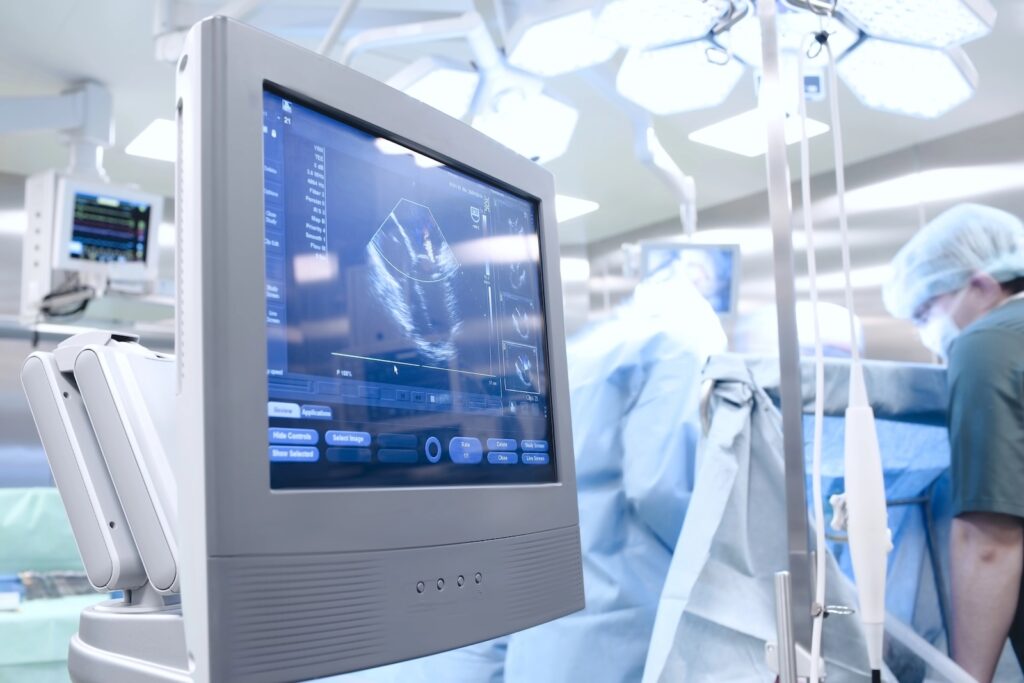
Cardiac diagnostics comprises all examination procedures used to assess the structure, function and health of the cardiovascular system. It is the foundation of any well-founded cardiological diagnosis and the basis for targeted therapy. In our cardiology practice under the direction of Dr. Raphael Bruno, we offer you the entire spectrum of modern, non-invasive cardiac diagnostics. Cardiac diagnostics. Our aim is to draw a precise and comprehensive picture of your heart through the intelligent use of the latest technology and our medical expertise.
The pillars of non-invasive cardiac diagnostics
The modern Cardiac diagnostics is based on various pillars that shed light on different aspects of the heart and complement each other. Only the interaction of these procedures enables a complete assessment.
The goals of the Cardiac diagnostics are manifold:
Overview of the most important diagnostic procedures
Diagnostic procedure | Main question to be answered |
Resting ECG | What is the basic heart rhythm? Are there any signs of acute or old damage? |
Long-term ECG | Do only occasional cardiac arrhythmias occur in everyday life? |
Echocardiography (heart ultrasound) | How is the heart structured? How good is the pumping function? Are the heart valves in order? |
Exercise ECG | Are there any signs of a circulatory disorder or arrhythmia? |
Long-term blood pressure measurement | How does blood pressure behave over 24 hours, especially during sleep? |
Vascular ultrasound | Are there already arteriosclerotic deposits in the vessels? |
Electrical cardiac diagnostics: tracking down the rhythm (ECG)
The electrical Cardiac diagnostics An electrocardiogram (ECG) is the basis of every cardiological examination. It measures the electrical currents that trigger and control every heartbeat.
Imaging cardiac diagnostics: A window to the heart (echocardiography)
The imaging Cardiac diagnostics allows a direct, pain-free view of the beating heart. The central procedure here is echocardiography, or cardiac ultrasound. This risk-free examination provides a wealth of information about:
This examination is essential for the diagnosis of heart failure, heart valve defects and many other structural heart diseases.
Functional cardiac diagnostics: testing the heart under stress
Many heart diseases, especially coronary heart disease (CHD), only become apparent when the heart is challenged. The functional Cardiac diagnostics simulates this load under controlled and safe conditions.

Specialized cardiac diagnostics: blood pressure and vascular status
A comprehensive Cardiac diagnostics looks beyond the heart itself and encompasses the entire cardiovascular system.
Frequently asked questions about cardiac diagnostics
Here you will find answers to frequently asked questions about diagnostic procedures in cardiology.
Which examination is the „most important“ in cardiac diagnostics?
There is no one „most important“ examination. The strength of modern Cardiac diagnostics lies in the intelligent combination of procedures. The ECG is essential for the rhythm, the ultrasound for the structure and the stress test for the function under stress. The experienced cardiologist selects the components that are necessary to answer your individual question.
Why are several examinations often necessary?
Each diagnostic procedure has its own strengths and provides different information. An abnormal finding in one examination (e.g. in the exercise ECG) often requires confirmation or further differentiation by another procedure (e.g. stress echocardiography). In this way, a reliable diagnosis is developed step by step.
Are the diagnostic procedures painful or dangerous?
All of the procedures carried out in our practice Cardiac diagnostics are non-invasive and are considered very safe. ECG and ultrasound are completely painless. During an exercise ECG, the exertion is noticeable, but the examination takes place under constant medical supervision to minimize any risk.
How quickly will I receive my results?
The results of most examinations, such as resting ECG, ultrasound and exercise ECG, are available immediately and will be analyzed directly after the Cardiac diagnostics will be discussed with you by Dr. Raphael Bruno. The evaluation of long-term examinations (ECG, blood pressure) usually takes one to two days, after which a separate discussion of the findings takes place.
Can cardiac diagnostics predict a future heart attack?
The Cardiac diagnostics cannot predict the date and time of a heart attack. However, it can very accurately reveal the underlying risks and existing damage that can lead to a heart attack. These include circulatory disorders, calcification of the blood vessels and other risk factors. Based on this, preventive therapy can be initiated to drastically reduce the risk of a heart attack.
What does „non-invasive“ mean?
„Non-invasive“ means that no intervention in the body, such as an incision or the insertion of a catheter, is necessary for the examination. All of the procedures we offer for Cardiac diagnostics are non-invasive. They are gentle and without the risks associated with surgical procedures.
Do I need to prepare for the examinations?
No special preparation is necessary for most tests. You should be fasting for a blood test to determine blood lipids. Before a stress test, it is recommended that you do not eat a large meal and wear comfortable clothing. You will receive detailed instructions when you make your appointment.
My family doctor has already done some tests. Why are they being repeated?
Findings, especially ECG and blood pressure, may change. A repeat examination as part of the specialist medical Cardiac diagnostics serves to record the current condition and place it in the overall context of the specialized examination. However, previous findings are extremely valuable and help us to assess the development and avoid duplicate examinations.
How reliable are the results?
The modern methods of Cardiac diagnostics are very reliable and highly informative when performed and interpreted correctly by an experienced cardiologist. An unremarkable finding in a comprehensive cardiological examination can rule out a relevant heart disease with a very high probability.
What happens after cardiac diagnostics?
The Cardiac diagnostics is not an end in itself. It always ends with a medical consultation in which the results are summarized and explained in plain language. Based on this, a decision is made together with you as to whether treatment is necessary, whether a further check-up is recommended or whether you can rest assured.
Precise diagnostics - the basis for your safety
A carefully executed and expertly interpreted Cardiac diagnostics is the key to successful treatment and gives you the confidence you need when dealing with your heart health. At Dr. Raphael Bruno's practice, we ensure that you receive the highest level of diagnostics. Make an appointment to get to the bottom of your complaints or to have your heart health comprehensively checked.



 German German
  English
 Arabic
 Japanese
 Chinese
 Russian