
Cardiac catheterization is a crucial examination in modern cardiology, which is used both for precise diagnostics and for the direct treatment of heart disease. At our cardiology practice Kardio Pro in Düsseldorf, we provide comprehensive advice on this procedure. Dr. Raphael Bruno uses the latest non-invasive diagnostics to clarify whether a Cardiac catheter-examination is necessary and sensible for you. We accompany you throughout the entire process: from careful preparation and organization of the examination in a specialist clinic in Düsseldorf to the essential follow-up care in our practice.
Cardiac catheterization: What is it and when is it necessary?
One Cardiac catheterCoronary angiography is a minimally invasive, X-ray-assisted procedure. A very thin, flexible plastic tube (the catheter) is inserted through an artery - usually in the wrist (radial artery) or, more rarely, in the groin (femoral artery) - and advanced to the heart. The doctor can inject contrast medium directly into the coronary arteries via this catheter. The X-ray images then make the blood flow visible and show constrictions (stenoses) or occlusions with the utmost precision.
The decision for a Cardiac catheter-The decision to perform a CT scan (CT => stress test ==> coronary) is made by your cardiologist Dr. Raphael Bruno after careful consideration and on the basis of previous examinations. The most common reasons (indications) for this procedure are
In our practice in Düsseldorf, we create the basis for a targeted and safe performance of the cardiac catheter through comprehensive pre-diagnostics.
Our role as your cardiology practice before and after cardiac catheterization
It is important to understand that the Cardiac catheter-examination itself is carried out in specialized cardiology centers or hospitals. However, as your outpatient cardiology practice Kardio Pro, we are your central and constant point of contact who manages and accompanies the entire process.
Our services before the procedure:
Our services after the procedure:
So you are never alone at any time. We are your guide and medical partner before, during and after the Cardiac catheter.
Cardiac catheterization: The typical course of the procedure
Although the examination takes place in hospital, it is important to us that you know exactly what to expect. The fear of the unknown can be reduced by providing transparent information.
One Cardiac catheter-The examination usually proceeds as follows:
The pure diagnostic examination usually only takes 20 to 30 minutes.
Diagnostic vs. therapeutic cardiac catheterization: A comparison
The Cardiac catheter is not only used for pure imaging, but also enables the direct treatment of constrictions during the same procedure. A distinction is therefore made between diagnostic and therapeutic (interventional) procedures.
Feature | Diagnostic cardiac catheterization | Therapeutic cardiac catheterization (intervention) |
Main objective | Visualization of the coronary arteries, assessment of cardiac function | Elimination of constrictions, restoration of blood flow |
Typical measures | Contrast imaging (angiography), pressure measurements | Balloon dilatation (PTCA), implantation of a stent |
Examples | Clarification of chest pain with suspected CHD | Treatment of an acute myocardial infarction, removal of a high-grade stenosis |
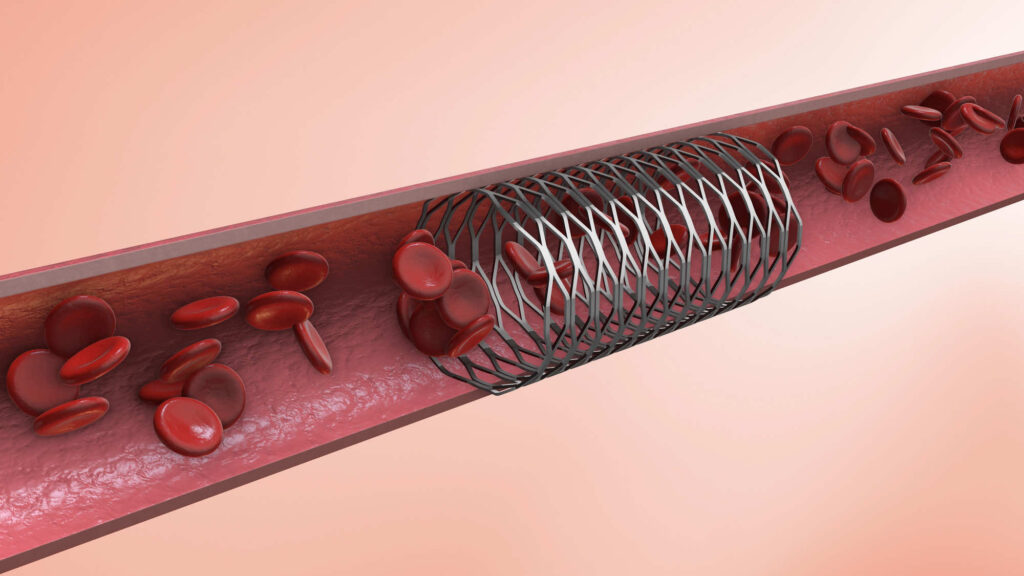
With the Balloon dilatation (PTCA) a small balloon is placed at the tip of the catheter in the constriction and inflated to widen the vessel. In order to keep the vessel permanently open, a Stent - a small tube made of metal mesh - is implanted. These interventions are now routine and have revolutionized the treatment of CHD.
Frequently asked questions about cardiac catheterization
Here we answer common questions that patients at the Kardio Pro practice ask us about cardiac catheterization.
Do you perform cardiac catheterization in your practice?
No, this clarification is very important to us. As an outpatient specialist practice, we carry out Cardiac catheter-examination yourself. We determine the medical necessity, prepare you optimally and take over the complete aftercare. The procedure itself takes place in a specialized department of a cooperating hospital in Düsseldorf and we not only work together with the university hospital, but are also networked with the Augusta and EVK.
Is a cardiac catheterization painful?
The examination itself is not painful. You will be given a local anesthetic at the puncture site so that you only feel a small prick from the puncture. The advancement of the catheter inside the vessels is not noticeable as the inner walls of the vessels have no pain nerves. Only the administration of the contrast medium can cause a brief, intense feeling of warmth.
How long does the hospital stay last?
In the case of a purely diagnostic Cardiac catheter-After the intervention via the wrist and without complications, patients can often leave the clinic on the same day or the morning after. If an intervention with stent implantation has been performed, the stay is usually one to two nights for monitoring. In the case of a heart attack, the stay is correspondingly longer.
What do I have to consider after a cardiac catheterization with a stent?
Aftercare is crucial for long-term success. The most important thing is to consistently take the prescribed blood-thinning medication (usually two different preparations for several months) to prevent the formation of blood clots in the stent. In addition, regular check-ups at our practice and a heart-healthy lifestyle are essential.
What are the risks of a cardiac catheterization?
Although the Cardiac catheter is a routine procedure today, it is an invasive procedure with potential risks. The most common, mostly harmless complications include bruising at the puncture site. Rarer risks include secondary bleeding, allergic reactions to the contrast medium, cardiac arrhythmia or damage to the kidneys. You will be informed about all risks in detail.
Will I be fully resilient again after the examination?
After a purely diagnostic examination, you should rest for a few days, especially the arm or groin where the puncture was made. After a stent implantation, the duration of rest depends on the individual findings, but a gradual return to normal activity is usually possible and desirable after about a week. You will receive the exact recommendations from us.
Why is the wrist usually chosen as the access route today?
The approach via the wrist artery (radial approach) has proven to be the most suitable for the Cardiac catheter has become the standard in many cases. The advantage is a significantly lower risk of bleeding compared to access via the groin. In addition, patients can get up again more quickly after the procedure and are less restricted in their mobility.
What is a drug-eluting stent?
Modern stents are usually coated with a drug (drug-eluting stent, DES). This drug is slowly released into the vessel wall over several weeks and inhibits cell growth there. This significantly reduces the risk of re-narrowing within the stent (in-stent restenosis).
Do I have to take medication for the rest of my life after a cardiac catheterization?
In most patients with coronary heart disease who are treated with Cardiac catheter has been diagnosed, lifelong drug therapy is necessary. This usually includes an antiplatelet agent (such as ASA), a cholesterol-lowering drug (statin) and often medication to control blood pressure. This therapy protects you from the progression of the disease and future events.
Does cardiac catheterization replace other cardiological examinations?
No, the Cardiac catheter is not a substitute, but a supplement and often the conclusion of a diagnostic chain. Examinations such as the stress ECG, cardiac ultrasound or the long-term ECG are and remain the fundamental tools in our practice. They help us to make the right decision as to whether an invasive procedure such as cardiac catheterization is necessary at all.
Comprehensive care: Your care around the cardiac catheter
An upcoming Cardiac catheter-It's understandable that a medical examination can cause worry. At the Kardio Pro practice in Düsseldorf, we want to take these worries away from you by providing seamless and personal care. Dr. Raphael Bruno and his team are your permanent contacts who will guide you through the entire process - with the highest level of medical expertise and human care. Make an appointment to discuss all your questions at your leisure.

 German German
  English
 Arabic
 Japanese
 Chinese
 Russian