
Der Herzkatheter ist eine entscheidende Untersuchung in der modernen Kardiologie, die sowohl zur präzisen Diagnostik als auch zur direkten Behandlung von Herzerkrankungen eingesetzt wird. In unserer kardiologischen Praxis Kardio Pro in Düsseldorf beraten wir Sie umfassend zu diesem Verfahren. Dr. Raphael Bruno klärt auf Basis nicht-invasiver Diagnostik nach aktuellem Stand, ob eine Cardiac catheter-examination is necessary and sensible for you. We accompany you throughout the entire process: from careful preparation and organization of the examination in a specialist clinic in Düsseldorf to the essential follow-up care in our practice.
Cardiac catheterization: What is it and when is it necessary?
One Cardiac catheter-Untersuchung, auch Koronarangiographie genannt, ist ein minimal-invasives, röntgengestütztes Verfahren. Dabei wird ein sehr dünner, biegsamer Kunststoffschlauch (der Katheter) über eine Arterie – meist am Handgelenk (Arteria radialis) oder seltener in der Leiste (Arteria femoralis) – bis zum Herzen vorgeschoben. Über diesen Katheter kann der Arzt Kontrastmittel direkt in die Herzkranzgefäße spritzen. Die Röntgenaufnahmen machen dann den Blutfluss sichtbar und zeigen Engstellen (Stenosen) oder Verschlüsse detailliert.
The decision for a Cardiac catheter-The decision to perform a CT scan (CT => stress test ==> coronary) is made by your cardiologist Dr. Raphael Bruno after careful consideration and on the basis of previous examinations. The most common reasons (indications) for this procedure are
In our practice in Düsseldorf, we create the basis for a targeted and safe performance of the cardiac catheter through comprehensive pre-diagnostics.
Our role as your cardiology practice before and after cardiac catheterization
It is important to understand that the Cardiac catheter-examination itself is carried out in specialized cardiology centers or hospitals. However, as your outpatient cardiology practice Kardio Pro, we are your central and constant point of contact who manages and accompanies the entire process.
Our services before the procedure:
Our services after the procedure:
So you are never alone at any time. We are your guide and medical partner before, during and after the Cardiac catheter.
Cardiac catheterization: The typical course of the procedure
Although the examination takes place in hospital, it is important to us that you know exactly what to expect. The fear of the unknown can be reduced by providing transparent information.
One Cardiac catheter-The examination usually proceeds as follows:
The pure diagnostic examination usually only takes 20 to 30 minutes.
Diagnostic vs. therapeutic cardiac catheterization: A comparison
The Cardiac catheter is not only used for pure imaging, but also enables the direct treatment of constrictions during the same procedure. A distinction is therefore made between diagnostic and therapeutic (interventional) procedures.
|
Feature |
Diagnostic cardiac catheterization |
Therapeutic cardiac catheterization (intervention) |
|
Main objective |
Visualization of the coronary arteries, assessment of cardiac function |
Behandlung von Engstellen, Verbesserung des Blutflusses |
|
Typical measures |
Contrast imaging (angiography), pressure measurements |
Balloon dilatation (PTCA), implantation of a stent |
|
Examples |
Clarification of chest pain with suspected CHD |
Behandlung eines akuten Herzinfarkts, Behandlung einer hochgradigen Stenose |
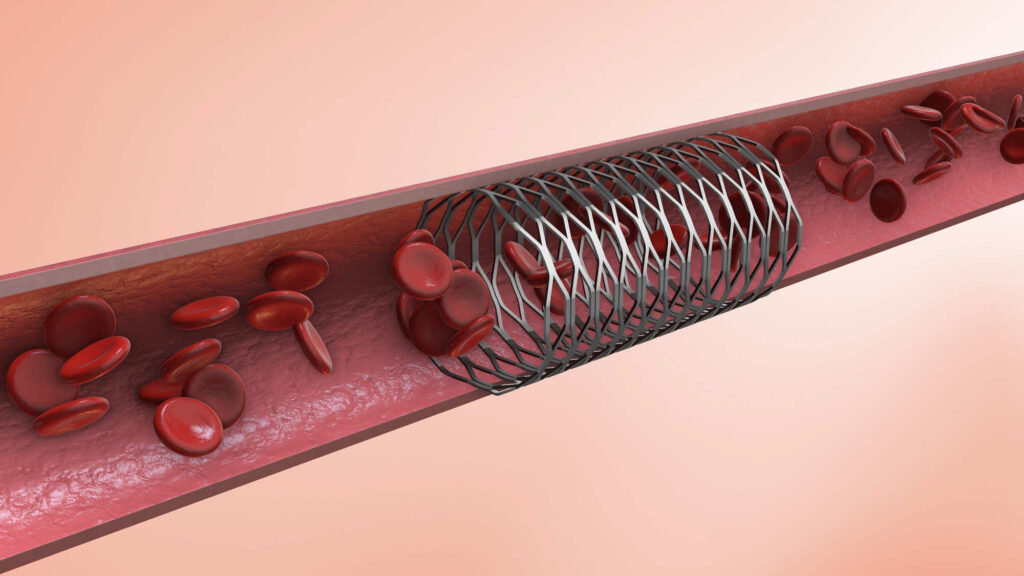
With the Balloon dilatation (PTCA) a small balloon is placed at the tip of the catheter in the constriction and inflated to widen the vessel. In order to keep the vessel permanently open, a Stent - a small tube made of metal mesh - is implanted. These interventions are now routine and have revolutionized the treatment of CHD.
Frequently asked questions about cardiac catheterization
Here we answer common questions that patients at the Kardio Pro practice ask us about cardiac catheterization.
Do you perform cardiac catheterization in your practice?
No, this clarification is very important to us. As an outpatient specialist practice, we carry out Cardiac catheter-Untersuchung nicht selbst durch. Wir beurteilen die medizinische Notwendigkeit, bereiten Sie sorgfältig vor und begleiten Sie in der Nachsorge. Der Eingriff selbst findet in einer spezialisierten Abteilung eines kooperierenden Krankenhauses in Düsseldorf statt; wir sind dafür mit dem Universitätsklinikum, dem Augusta-Krankenhaus und dem EVK vernetzt.
Is a cardiac catheterization painful?
The examination itself is not painful. You will be given a local anesthetic at the puncture site so that you only feel a small prick from the puncture. The advancement of the catheter inside the vessels is not noticeable as the inner walls of the vessels have no pain nerves. Only the administration of the contrast medium can cause a brief, intense feeling of warmth.
How long does the hospital stay last?
In the case of a purely diagnostic Cardiac catheter-After the intervention via the wrist and without complications, patients can often leave the clinic on the same day or the morning after. If an intervention with stent implantation has been performed, the stay is usually one to two nights for monitoring. In the case of a heart attack, the stay is correspondingly longer.
What do I have to consider after a cardiac catheterization with a stent?
Die Nachsorge ist entscheidend für den langfristigen Erfolg. Am wichtigsten ist die konsequente Einnahme der verordneten blutverdünnenden Medikamente (meist zwei verschiedene Präparate für mehrere Monate), um das Risiko für die Bildung von Blutgerinnseln im Stent zu senken. Zudem sind regelmäßige Kontrollen bei uns in der Praxis und eine herzgesunde Lebensweise unerlässlich.
What are the risks of a cardiac catheterization?
Although the Cardiac catheter is a routine procedure today, it is an invasive procedure with potential risks. The most common, mostly harmless complications include bruising at the puncture site. Rarer risks include secondary bleeding, allergic reactions to the contrast medium, cardiac arrhythmia or damage to the kidneys. You will be informed about all risks in detail.
Will I be fully resilient again after the examination?
After a purely diagnostic examination, you should rest for a few days, especially the arm or groin where the puncture was made. After a stent implantation, the duration of rest depends on the individual findings, but a gradual return to normal activity is usually possible and desirable after about a week. You will receive the exact recommendations from us.
Why is the wrist usually chosen as the access route today?
The approach via the wrist artery (radial approach) has proven to be the most suitable for the Cardiac catheter has become the standard in many cases. The advantage is a significantly lower risk of bleeding compared to access via the groin. In addition, patients can get up again more quickly after the procedure and are less restricted in their mobility.
What is a drug-eluting stent?
Moderne Stents sind meist mit einem Medikament beschichtet (Drug-Eluting Stent, DES). Dieses Medikament wird über mehrere Wochen langsam in die Gefäßwand freigesetzt und hemmt dort das Zellwachstum. Dadurch wird das Risiko einer erneuten Verengung innerhalb des Stents (In-Stent-Restenose) erheblich

 German German
 English
 Arabic
 Japanese
 Chinese
 Russian